Key personalities
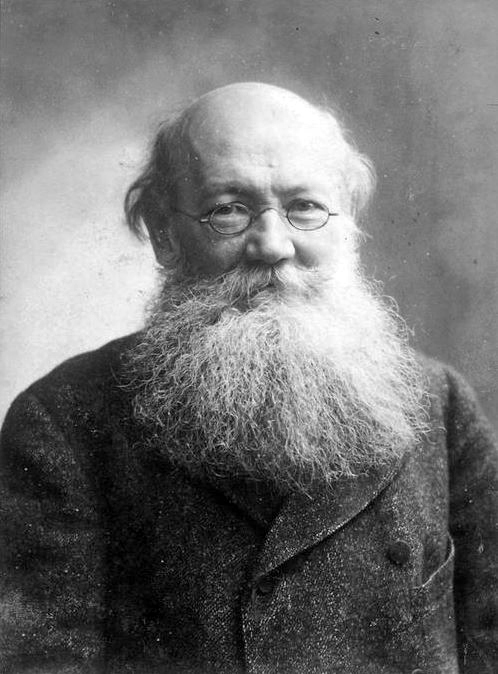 Kropotkin was born in Moscow into an aristocratic land-owning family. His father was a royal officer while his mother was the daughter of a General. Kropotkin was the youngest of four. His mother died of tuberculosis when he was three years old and his father remarried two years later. As a young man, Kropotkin was hand-picked by the Tsar to attend Page Corps, a military academy in Imperial Russia, and later became the emperor's personal Page de Chambre. Here, his views on imperial policy soured and he became more and more interested in social theory.
As part of his tour service, he was sent up to Siberia, where he would depen his studies and seperate himself financially from his father. He developed a firm compassion for the poor and a hatred for the indignities of serfdom. During this time, he was also introduced to anarchism by exiled poet and political prisoner, Mikhail Larionovitch Mikhailov.He was also really interested in geography and led many expeditions.His time in Siberia taught him to appreciate peasant and social organization and solidified in him that administrative reform could not improve social conditions, as well as disillusioned him enough to convince him to leave the military. He had a relatively successful career in geography after leaving the military. Kropotkin became increasingly revolutionary in his writings over this tie, although he wasn't known for activism. He attended meetings on revolutionism and even travelled to Switzerland and Western Europe to witness socialist worker's movements. His travels and experiences cemented his growing socialist and anarchist ideologies. Back in St. Petersburg, Kropotkin joined a group of revolutionaries called the Chaikovsky Circle that he considered more educational than revolutionary. His first political memo in November of 1873 covered a basic plan for stateless social reconstruction. Members of the circle began to get arrested in late 1873. Kropotkin got arrested in March of 1874. He was eventually moved to a military hospital due to poor health. With assistance from friends, he escaped from the hospital to Switzerland in June of 1876.
In exile, he associated with the Jura Federation, which was a Swiss anarchist faction. There, he met his future wife, Sophie Kropotkin. In 1879, he started the anarcho-communist journal Le Révolté in Geneva. He used the journal to propagate his personal views of anarchist communism, which was the distribution of work product communally on a need basis rather than work basis. There, he also published his most known pamphlet, "An Appeal to the Young" in 1880. On Russia's insistence, Kropotkin was expelled from Switzerlad after the assasination of Alexander II in 1881, due to his allefed association to it. He moved to France after, however, after learning that a tsarist group intented to kill him, he moved to London. In late 1882, no longer able to bear living in London, he returned to France where he was arrested for agitation, partially to appease Russia. He was sentenced to 5 years in Lyons but was transferred to Clairvaux in 1883. During his prison stay, he continued his academic work. A public campaign of intellectuals and French legislators called for his release. A compilation of his writings from Révolté, was published and became the main source for his thoughts on revolution. In prison, he contracted scurvy and malaria, worsening his health significantly and leading to his release in 1886.
He returned to England, with only brief trips to European countries. His only child, Alexander Kropotkin, was born the following year. It is during this period in England that he'd publish his most influential books, such as "The Conquest of Bread", several of which began as journal articles. He also retained his love for the sciences, contributing to journals such as the Geographical Journal and Nature. During this time, his work on animal cooperation also lead to the publishing of "Mutual Aid: A factor of evolution" as an argument against Darwinism. He became more scholarly, his revolutionary zeal subsiding. Following a scientific congress in Toronto in 1897, he toured Canada. He went on to travel around America as well, where he met figures like Goldman. Several of his works, including "Fields, Factories and Workshops", were published by American publishers as well. In 1901, he was invited to give lectures on Russian literature at the Lowell Insitute. His 70th birthday in 1912, had celebratory gratherings in London and Paris. Kropotkin supported Western entry into World War I, which divided the anarchist movement as the latter had been anti-war. He also insisted that Russians should support the war as well, even returning to Russia for the revolution. This damaged his previous esteem as a luminary of socialism.
He returned to Russia in June 1917 where he refused a cabinet seat he was offered. His residence application in Moscow in 1918 was personally approved by Vladimir Lenin. He would meet with the latter in 1919 and continued correspondance by mail to discuss contemporary political questions. Here, he advocated for worker's cooperatives and argued against Bolshevik hostage policy and the centralization of authority. He was also against western military intervention in Russia. His advocacy for political and anarchist prisoners in Russia, and for the Russian revolution, increased his esteem once again. Despite this, he ultimately had little impact on the Russian revolution. Kropotkin died of pneumonia on the 8th of February 1921. His family refused the offer of a state funeral. With the occasion of his funeral in Moscow, the Bolsheviks permitted the diminshed Russian anarchist movement an offical, restrained occasion to memorialize him. This would come to be the last major anarchist demonstration of the period in Russia, as the movement and his writings were fully suppressed later that year.
During his many travels, he met many prominent proponents of anarchist communism, such as Malatesta and Goldman. However, he was first thrust into the eye of anarchist communism through his publishings in Le Révolté and his philosophy expressed within. He soon became the philosophy's most prominent prononent. His works, such as "The Conquest of Bread" and "Fields, Factories and Workshops" are considered some of the founding works of anarchist communism. These works were some of the only accessible doctrines at the time. He is a respected figure head of the ideology and his works are considered a must-read within the community, despite his controversy in his later years. He is also often considered one of the founders of anarchist communism. Additionally, he influenced many revolutionaries, such as Makhno, but also intellectuals like James Joyce. Due to his work in geography, he is also the name sake for many geographical territories.
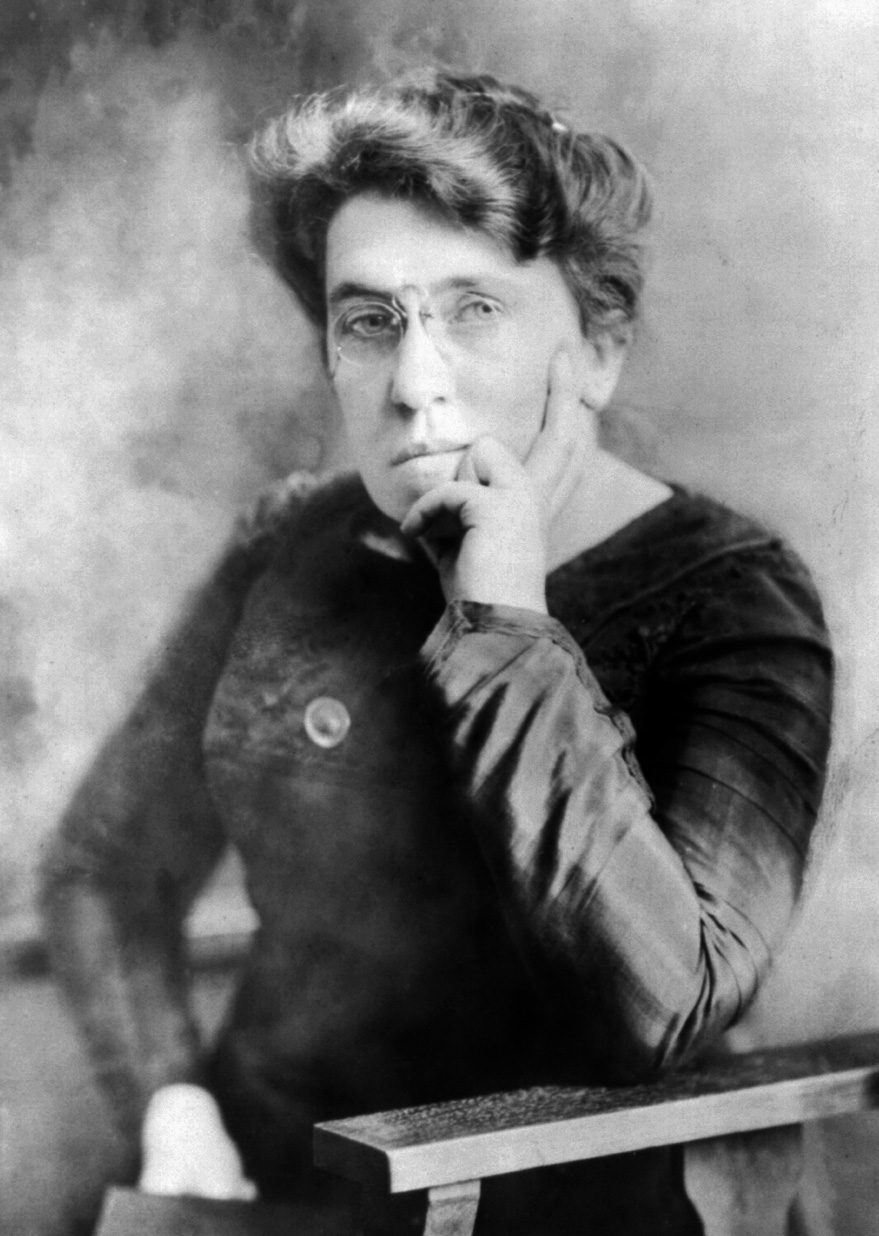 Goldman was born in Kaunas into an Orthodox Jewish family. She was physically abused as a child by her father. Her family moved to a small village where her father ran an inn. Here, her distaste for violent authority started. Her family then moved to Königsberg, then part of the German Empire. Now enrolled in school, she was once again beaten by one teacher for disobedience. Another teacher attempted to molest her and others, however Goldman thought back and the teacher was fired. She also found a mentor, her German teacher. She was a passionate student and passed the admission exam for a gymnasium but was not able to attend due to one of her teachers. Her family then moved to Saint Petersburg where her father's repeated failures at opening a buisness forced the then teenage Goldman to take on an assortment of jobs. She begged to go back to school, however her father would not allow it. She instead studied the political turmoil around her. When she was 15, her father tried to arrange a marriage for her. They constantly fought on the subject as Goldman insisted she would only marry for love. Constantly bothered by men's advances at her jobs, one man took her into a hotel room and committed what we can understand to be rape. The trauma of the encounter soured her interactions with men for the rest of her life.
On the 29th of December 1885, Goldman and her sister Helena moved to New York City to join her other sister Lena in Rochester. Their parents would come to join them a year later, looking to flee the rising antisemitism in Russia. Goldman took on a job as a seamstress, where she met Jacob Kershner. They got married in February of 1887. Their marriage was rocky and unhealthy. She became more engaged with the political turmoil, particularly in the aftermath of the Haymarket affair and the anti-authoritarianism of anarchism. Less than a year after her marriage, the couple divorced. As a result, her parents kicked her out and she headed for the southeast of New York city. On that day, she was introduced to Alexander Berkman at Sach's Café. He invited her to a public speech where she heard Johann Most speak, editor of a radical publication. Impressed by his oration, Most took to mentoring her in public speaking. He encouraged her, even believing she was to take his place one day. She quickly found passion and excitement in public speaking. She fell out with Most, as she felt she was only parroting Most's views. Most in turn became angry with her and she left to join another publication. Meanwhile, her friendship with Berkman had evolved into becoming lovers. Although their relationship had many difficulties, they retained a close bond. In 1892, Goldman and Berkman went up to Pittsburgh to participate in the Homestead Strike. The final round of talks between the Carnegie Steel Company and the Amalgamated Association of Iron and Steel Workers had broken down, resulting in the company locking the workers out of the plant and the workers going on strike. A fight broke out between guards and strikers, resulting in the death of 7 guards and 9 strikers. In retaliation, Goldman and Berkman planned to assassinate Henry Frick, the manager of the company, which they expected would inspire a revolt. Berkman was in charge of the assasination while Goldman would stay behind to explain his motives after his arrest. The attempt ultimately failed, with the workers turning on Berkman instead, and the latter was charged with attempted murder.
The Panic of 1893, an economic depression, struck the following year, resulting in a high unemployment rate and hunger demonstrations. Goldman spoke to crowds, encourgaging the unemployed to take immediate action. Her exact words are unclear, due to differing testimonies, however she was arrested a week later and charged with inciting to riot. Despite positive publicity, the jury was persuaded and she was sentenced to a year in the Blackwell's Island Penitentiary. When she was released, a crowd of 3,000 greeted her and she was soon swamped with requests for interviews and lectures. She conducted the first cross country tour by an anarchist speaker. She later travelled to Europe and helped organise the 1900 International Anarchist Congress. In 1901, she was detained by the police for intense interrogation due to suspected involvement in the assasination of President McKinley, despite the shooter, Leon Czolgosz, insisting repeadetly that, although inspired by her, Goldman had not guided him in the assasination. She was eventually released but refused to condemn Czolgosz's actions, an act for which the media was quick to villify her and other anarchists condemned her. After Czolgosz's execution, she withdrew from society between 1903-1913. The passage of the Anarchist Exclusion Act and a new wave of oppositional activism drew her back into the movement, she once again had the nation's ear. However, the activism was taking a mental toll on her. In 1906, she launched a pubication, Mother Earth. Mother Earth published original works by its editors and anarchists all around the world, but also reprinted from famous writers such as Kropotkin and Nietzsche. In the same year, Berkman was released from prison in a pitiful state. He took helm of Mother Earth in 1907 while Goldman toured the country to raise funds. She participated in the International Anarchist Congress later that year.
In the next decade, Goldman travelled the country nonstop to deliver lectures. During this time, she took a new lover, Ben Reitman. She began to feel frustrated with her audience, as she found they were not engaged enough, leading to her publishing Anarchism and Other Essays. She was also a great supporter of Margaret Sanger, an advocate for access to contraception, and regularly distributed her pamphlets. When it was announced the US would enter WW1, Goldman came out in staunch opposition to the war and conscription. On June 15 1917, Goldman and Berkman were arrested and charged with conspiracy to induce persons not to register. They were found guilty and sentenced to two years in prison, and possibility of deportation after release. In jail, she worked with Kate Richards O'Hare and Gabriella Segata Anatolini, to agitate for better conditions among the prisoners. Released during the Red Scare, Goldmman and Berkman were put infront of a deportation trial. Her and Berkman were deported to the USSR in 1920 on the Budford with other political prisoners and aliens. Although Goldman had initially expressed a positive view on the Russian revolution, by the time she neared Europe she expressed fears about the civil war. She also expressed a strong disdain for the state, anti-capitalist or not. She and Berkman travelled the country, finding repression, corruption and mismanagement, leading them to condemn the Soviet state. In March 1921, they stood in support with the strikers that demanded better food rations and more union autonomy. This strike resulted in the Kronstadt rebellion, which ended with thousands dead and arrested, and for the two, solidified the thought that the country had not future. They moved to Berlin a short while after. Goldman found it difficult to acclimate and moved to London in September 1924. In 1925, the threat of deportation loomed again and she married aquaintance and scottish Anarchist, James Colton, at his offer to provide her British citizenship. Life in London was stressful, even though her citizenship provided her limited security to travel to France and Canada. She briefly moved to Canada, then to France in 1928 to write her auto-biography for two years. The release of her book, Living My Life, was met with great praise from critical reviews. In 1933, she got conditional permission to come speak in the US and she soon found herself once again flooded with invitations to talk and interviews. When her visa expired, she moved to Toronto and wrote articles for US publications. In March of 1936, she received a call that Berkman was in great distress. She left immediately for Nice, however when she arrived she found he had shot himself. He died later that evening.
In 1936, during an anarchist revolution during the Spanish Civil War, she was invited to speak in Barcelona where she was greeted warmly. She began editing a bulletin for the CNT-FAI and responding to English mail. She began to worry when the CNT-FAI joined a government coalition and began make concessions to the Communists. However, her faith in the movement stayed unshaken and she praised the movement when travelling abroad to represent the CNT-FAI. The Nationalists declared victory and she returned to England, then Canada. As WW2 began to unfold in Europe, she reiterated her stance against war, feeling that Britain and France had missed their opportunity to oppose fascism and that the war would only bring about a new type of madness. On February 17th 1940, Goldman suffered a debilitating stroke. Despite her improvement over the next three months, she suffered another stroke on May 8th and passed away six days later at age 70. She was buried in the US, near the graves of those executed during the Haymarket Affair.
Goldman was well known during her life, often described as a dangerous women. She met with many of the great minds of anarchism and anarchist communism and her speeches influenced a great many people. She is considered one of the greatest orators in American history. Her ideas were also praised by feminist movements in the 1970s. She is considered an extremely important figure in anarchist communsim. She is remembered in her works and for bringing a great deal of intersection into the ideology. She broadened the scope on issues such as sexual liberty, reproductive rights and freedom of expression. Her belief in the value of aesthetics can also be seen in modern anarchism and art. Additionally, her help during the Spansih Civil War is not forgotten, as the former Secretary-General of the CNT, Mariano R.Vázquez, described her as their spiritual mother.
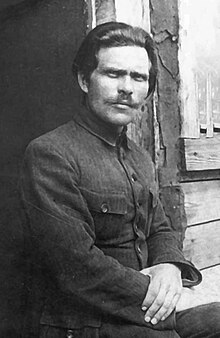 Makhno was born into a poor Ukranian peasant family in Huliaipole, at the time part of the Russian Empire. His father would die while he and his four siblings were quite young. He was often absent from school, preferring to play games and ice skate instead, and went to work at a farm at 10 years old, which he hated. He often rebelled against the land owners. He worked a number of different jobs to support his family. In 1905, when the revolution broke out, at 16, he quickly joined the revolutionary movement, eventually joining a local anarchist group where he'd come to learn all the foundations of anarchist communism. Due to a series of agrarian reforms that diesmpowered the local peasant community, the group started robbing wealthy buisnessmen and getting into fights with Tsarist police. In 1909, after the assassination of a police informant by the group, the police cracked down and arrested Makhno, as well as other members.
In 1910, Makhno was sentenced to be hanged, which was later changed to a life sentence of hard labour due to his young age. In prison, he contracted typhoid fever, which he nearly died from, and then later fell sick again from tuberculosis. He was frequently put into solitary confinement, due to messing with the guards. After seeing the prejudice that guards held towards prisoners of different class, he also became dissillusioned with intellectualism. When WW1 broke out, he took an internationalist position and opposed the war strongly. He was finally released during the February Revolution in 1917, 8 years after his sentencing. The prison had taken a great physical toll on him. After a few weeks, he returned to his home town in March 1917 at 28 years old. He reunited with his brothers and mother there, as well as being greeted by the village peasants. After a disagreement with the local anarchists, he helped establish a peasants union that quickly came to represent the majority of the local peasantry and was elected it's chairman. He also met his future wife during this period. He quickly became a leading figure in Huliaipole's revolutionary movement. He led workers in strike actions against their employers, resulting in full worker's control over the local industry. Having been to a peasant congress, he quickly became disillusioned with long debates and party politics. Makhno and his supporters slowly disarmed and minimized local law enforcement, allowing them to seize and equally redistribute land. The general disorganization of the wider anarchist movement dissapointed him, as despite its growth it could not compete with established parties. Under Makhno, large estates began to be collectivized and transformed into communes, one of which he himself lived on and participated in. In February 1918, the Central Powers invaded Ukraine and Huliaipole was brought under Austro-Hungarian rule, despite Makhno's attempts to resist. Making plans to take back his home region, he travelled up to Moscow, where he'd meet Piotr Kropotkin and Vladimir Lenin. The Bolsheviks then forged him a passport so he could return to Ukraine.
Makhno crossed the border in a disguise and discovered his house had been destroyed and oldest brother executed. He returned to Huliaipole in secret and began planning an insurgency. His forces managed to take over for a short time in September 1918, before withdrawing. Despite being surrounded, he managed to beat the Austro-Hungarian army in a surprise attack. His forces took Haliaipole again in November of 1918, after which they were recognized as the Revolutionary Insurgent Army of Ukraine, which Makhno was the Commmander-in-Chief of. A short while after, the Central Powers withdrew and the Red Army began to invade Ukraine from the north, while the White Army invaded from the south. In January 1919, the Insurgent Army decided to join the Red Army, with Makhno becoming the commander of a brigade. He heavily disliked his own commanders, a relationship which would only get worse after Nykyfor Hryhoriv rebelled against the Red Army, a rebellion for which Makhno blamed the Red Army. By June, the Bolsheviks had declared Makhno an outlaw and demanded for him to be arrested. The White Army took control of Huliaipole and Makhno resigned from the Red army, retreating to the west with his forces and linking up with those of Hryhoriv in July. Their agreement was short lived due to Hryhoriv's antisemetism. After their agreement broke down, Makhno's adjutant killed Hryhoriv. In September of the same year, the Red Army withdrew from Ukraine and Makhno's forces continued to fight the White Army on their own, which forced them to retreat further west. With an agreed truce with a nationalist leader, Makhno managed to beat the White Army and the Insurgent Army took over the majority of southern Ukraine, breaking the supply line of the White Army in the process and causing them to stop attacking Moscow. In turn, the White Army attacked Katerynoslav and forced the Insurgent Army to retreat from the city. Adding to the misfortune, the Insurgent Army caught epidemic typhus. In January 1920, the Red Army requested from him to go fight against Poland and made him an outlaw again once he refused. Thus, the Insurgent Army and Red Army started to fight again. Makhno's typhus got worse, leading to his falling into a coma, during which local peasants hid him. When he recovered, he started to engage in guerilla warfare against the Red Army. By August 1920, the two armies agreed to stop fighting and form an alliance to resist the White Army. Makhno didn't trust the them but hoped they would honour the agreement. In October, the Insurgent Army took back Huliaipole from the White Army. Then, the Insurgent Army split up, with some going to Crimea to keep attacking the White Army while others, including Makhno, stayed back. After the deafeat of the White Army in Crimea, the Bolsheviks turned on Makhno, claiming he disobeyed orders. In November of 1920, the Red Army attacked Huliaipole, causing the Insurgent Army to flee and meet up with its missing section in Crimea. A week later, they retook Huliaipole, taking even more towns in December. Despite this advance, Makhno's forces got surrounded and seperated into smaller groups, leading them to start fighting a guerilla war again. Makhno went north, where he would be wounded in battle.
By August of 1921, many of Makno's soldiers were dead and he himself was badly wounded. He decided to flee Ukraine to see medical treatment, with his unit fleeing to Romania. After spending a short time in a concentration camp, he recovered in Bucharest. Despite the Soviet's calls for extradition, the Romanian government refused. He moved to Poland in April of 1922, where he was held in another concentration camp. He and his wife, Halyna Kuzmenko, were suspected of planning an anti-Polish insurgency, for which they were sent to prison. His wife would give birth to their daughter Elena in prison. Eventually, their trial resulted in an acquittal and they moved to Danzig in 1924, where Makhno was put into prison once again before managing to escape to Berlin. In April of 1925, he moved to Paris in France where he met up with his family. It was during this time that he would come to co-author The Platform, contributing greatly to the creation of the platformist movement. The pamphlet called for a more organised anarchist movement, the disorganisation of which was one of Makhno's biggest critiques of the movement. The pamphlet was disliked by some anarchists, who called it authoritarian. By the late 1920s, he began to succomb to his worsening mental health and tuberculosis, which kept him out of work. He felt isolated from other Ukrainian exiles, especially after learning that Peter Arshinov defected to the USSR in the 1930s. This also put a strain on his relationship, and he seperated from his wife multiple times. His tuberculosis would be made worse by malnutrition. He spent the last few months of his life in hospital, where he'd eventually die on the 25th of July 1934. He was cremated, with his ashes being kept in Père Lachaise Cemetery. His wife and daughter would be deported to Nazi Germany in WW2, before being arrested by the USSR and exiled to Kazakhstan, living their for the rest of their lives.
The Ukraianian anarchist insurgency countinued after Makhno's flight to Romania in 1921. Makhnovist military groups operated all the way up until WW2. Today, various anarchist groups draw upon him as inspiration, such as the Revolutionary Confederation of Anarcho-Syndicalists. After the liberation of Ukraine, Makhno also became a hero in his hometown of Huliaipole, where a statue of him stands in the main square. There have also been many allusions to him in Ukrainian and Russian media. His legacy experienced a renewed interest after the 2022 invasion of Ukraine. His statue and a museum dedicated to him were destroyed in bombing, but his statue was carefully repaired by local authorities and revealed in Septemeber 2024. He is of great importance to the ideology of anarchist communism as well. The movement he inspire, Maknovism, is considered a branch of anarchist communism and motivated anarchist Ukrainian action for years. His work, the Platform, also created a branch of anarchist communism, platformism. He is held as a hero by many and is looked up to as an example, both for his committement to the ideology and his Insurgent Army.
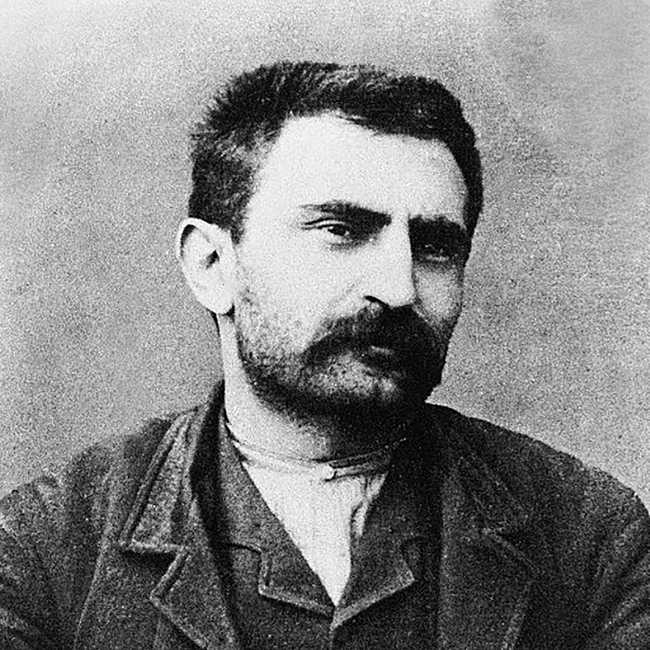 Malatesta was born into a family of middle class land owners in Santa Maria Maggiore. His family once ruled a region of Italy, Rimini. At age 14, he was arrested for the first time, for writing an insolent and threatening letter to the King. He joined the Italian section of the First International Working Men's Association (IRWA) in 1871, shortly after the uprising of the Paris Commune. He would dedicate the rest of his life to anarchism. In April of 1877, Malatesta and about thirty others started an insurrection. They burnt tax registers and declared an end to the King's reign, being met with enthusiasm. They were soon arrested and held for 16 months before being acquitted. After an attempt on the King's life by a radical anarchist, all radicals were kept under surveillance. Despite this, Malatesta continued his advocacy and activism for a social revolution. Eventually, he was forced to leave in 1878 due to the intense surveillance.
In his exile, he first went to Egypt briefly but was soon expelled. After being refused entry to Syria, Turkey, and Italy, he landed in Marseille and went to Geneva. In the then anarchist centre, he befriended other anarchists such as Kropotkin. After a few months, he was expelled from there too and made his way to Paris. In 1881, he moved to London, where he'd stay for the next 40 years. Much like in Paris, there he worked as a mechanic. He attended the July 1881 Anarchist Congress in London. The congress defined propaganda actions that all could follow and agreed that violent resistance would lead to social revolution. In the Anglo-Egyption War in 1882, Malatesta organised a group to help fight the British. He and three others departed for Egypt in August. They were eventually detained by British forces, without ever having fought. The following year, Malatesta secretly returned to Italy. There, he founded the anarchist paper La Questione Sociale. He went back to Naples in 1884 to nurse victims of cholera. He fled Italy to escape a three year prison term and headed for South America. He lived in Buenos Aires from 1885 to 1889 where he resumed publication of La Questionale Sociale to spread anarchism among the Italian community there. He helped found the first militant workers' union there. He returned to Italy in 1889 where he published a newspaper, L'Associazione. He remained there until he was forced to flee to London again.
The late 1890s came to be a period of turmoil in Italy with bad harvests, rising prices, and peasant revolts, as well as workers strikes. It seemed as though government authority was hanging by a thread. Malatesta took advantage of the situatian and returned to Ancona in early 1898. There, he took part in the rapidly spreading anarchist movement among the dockworkers. He was soon identified as a leader during street fighting between the workers and the police and was arrested. He was convicted of seditious association and sentenced to imprisonment on an island. From jail, Malatesta took against participation in elections, which contradicted other anarchist leaders at the time who were in favour of electoral participation, although only as an emergency measure during periods of turmoil. He escaped, with the help of anarchists around the world who arranged for him to leave on a fishermen's ship, in May of 1899 and made his way London. In the next few years, he visited the US, speaking to anarchists in the Italian and Spanish communities. In London, he was closely watched by the police, who regarded anarchists as a threat following the assassination of the Italian king.
In early January of 1910, he helped George Gardenstein in the Houndsditch robbery by selling him oxyacetylene. This robbery would be the precursor to the Siege of Sidney Street, a gunfight between police and Latvian revolutionaries. While in London, he also made trips to France, Switzerland, and Italy and went on a lecture tour in Spain. He wrote several important pamphlets during this time. He took part in the International Anarchist Congress of Amsterdam in 1907. After WW1, he returned to Italy for the final time. In 1921, the Italian government imprisoned him. They released him two months before the fascist government came into power. Despite the severe repression from Benito Mussolini of all independent press, Malatesta published the journal Pensiero e Volontà, although it earned him harrasement and the journal suffered from censorship. He spent his remaining years leading a quiet life, living as an electrician. For years, he suffered from a weak respiratory system and regular bronchial attacks, causing him to develop bronchial pneumonia. He died from the disease after a few weeks on the 22nd of July 1932.
His stay in Argentina left an impression on the workers' movement for years after his leaving. In 1902, the Unión Obrera Democrática Filipina, the first national trade union in the Philippines, adopted Malatesta's book Between Peasants as part of their political foundation. He is held as one of the most important Italian anarchists. He contributed greatly to the theory of the region. His advocacy and activism also changed the lives of many.
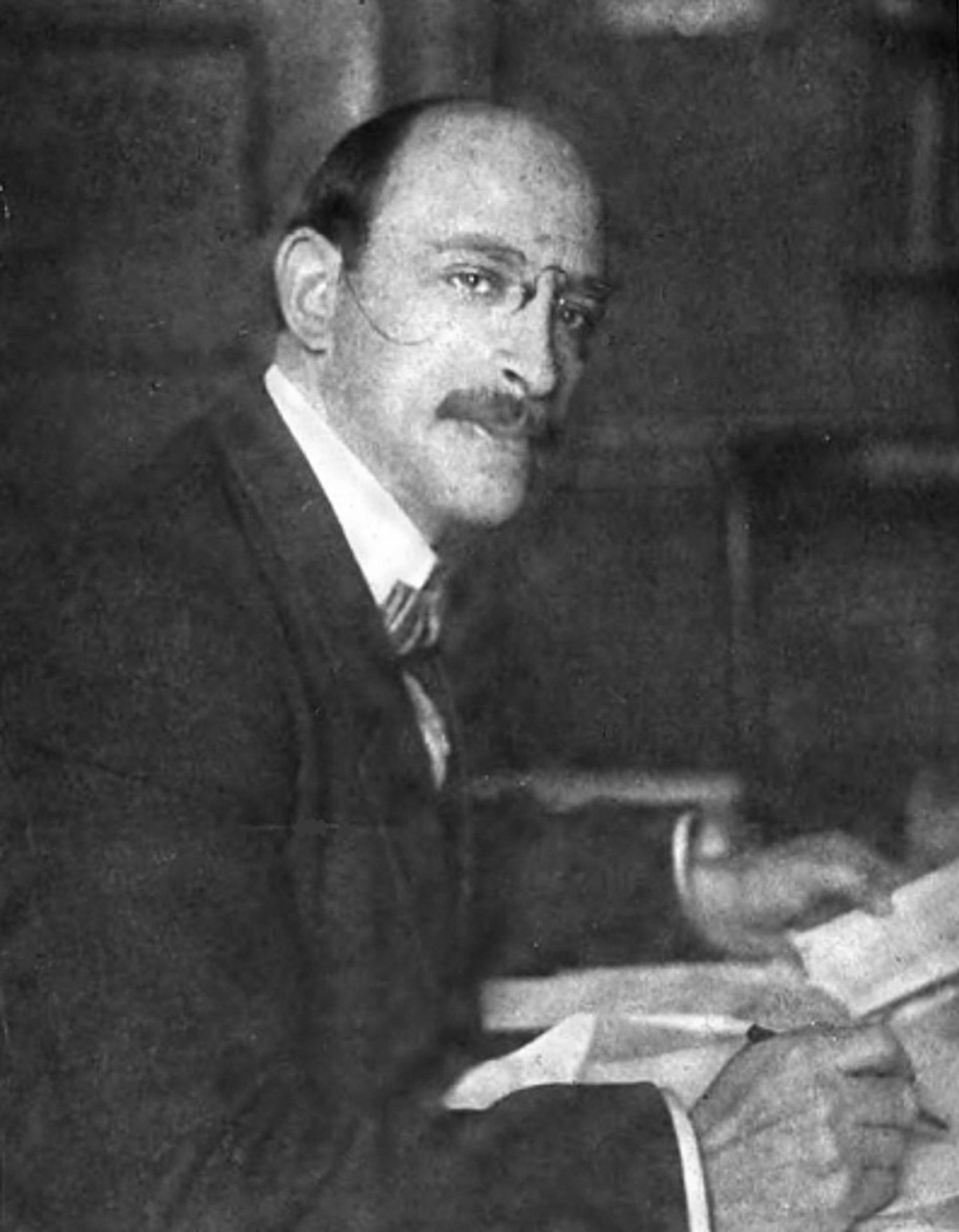 Berkamn was born into a well-off Lithuanian Jewish family in Vilnius, Lithuania, then the Russian Empire. In 1877, his famiy moved to Saint Petersburg. Much like his family, who had ties to nihlists, he was influenced by the growing radicalism in the city. After the assassination of the Tsar in 1881, he became intrigued by the ideas of populism and nihilism. At age 12, his father died and his family had to move to Kovno. He began to read radicalist literature and even distribute his own. His mother died in 1887, leaving his uncle responsible for him. A year later, Berkman was caught stealing copies of school exams and was expelled as a nihilist conspirator. This led to his decision to emigrate to New York City at age 15, without any contacts or knowledge of English.
Berkamn became an anarchist through his involvement with campaigns aiming to free the men convicted of the 1886 Haymarket bombing. He jointed the Pioneers of Liberty, a Jewish anarchist group, of which he became a prominent member. They took part in strikes and helped establish some of the first Jewish labour unions. Through his knowledge of German, Berkman came under the influence of Johann Most and became a typesetter for the newspaper Freiheit. In 1889, he met and began a romance with Emma Goldman and introduced her to Most. Berkman eventually fell out with Most and aligned himself with autonimists, an anarchist group that emphasized individual freedom, instead and worked for their publications.
In 1892, Goldman and Berkman went up to Pittsburgh to participate in the Homestead Strike. The final round of talks between the Carnegie Steel Company and the Amalgamated Association of Iron and Steel Workers had broken down, resulting in the company locking the workers out of the plant and the workers going on strike. A fight broke out between guards and strikers, resulting in the death of 7 guards and 9 strikers. In retaliation, Goldman and Berkman planned to assassinate Henry Frick, the manager of the company, which they expected would inspire a revolt. Berkman was in charge of the assasination while Goldman would stay behind to explain his motives after his arrest. The attempt ultimately failed, with Fritz surviving and a worker even turning on Berkman and hitting him with a hammer. Berkman became deeply interested in the debate concerning his action. He was heartbroken to see his old mentor Most disaprove of his actions but was encourage to hear Kropotkin approve of them and praise him. He decline a lawyer for the trial. The jury quickly and unanimously found him guilty on six counts, including attempted murder, and he was sentenced to 21 years in prison and one year in a workhouse.
Within weeks of being brought to prison, Berkman started planning his suicide. However, all his plans failed. He participated in Prison Blossoms, where he and two other men managed to transfer out a hand-written anarchist newsletter, which helped him improve his English. He frequently clashed with prison management over the mistreament of prisoners, resulting in frequent stays in solitary confinement. He frequently received letters from the outside. He attempted to apply for pardon twice,in 1879 and 1899, both of which were denied. He then drew up a plan for an escape, which included renting a house across the prison and digging a tunnel to it. Despite the hurdles, the tunnel was dug, however his escape was thwarted. The tunnel was discovered by playing children three weeks later and Berkman was put into solitary for nearly a year, at the end of which he tried to hang himself. His sentence was eventually reduced by two and a half years. In 1905, he was transported to a workhouse to live out the final 10 months of his sentence, where he found the conditions were much worse than in the prison. He ended up making many friends in prison. Berkman was released on May the 18th 1906, 14 years after his sentence. He was met at the gates by reporters and police. He met up with Goldman again, but found they had lost passion for each other and started an affair with a teenager instead. He continued to suffer from depression and suicidal intentions, much like he had in prison. After several months of rest, he began to recover and recount his prison years in a memoir. He also became an editor for Goldman's journal, Mother Earth. He helped establish the Ferrer Center, a free school and community center for adults. In September of 1913, the United Mine Workers called a strike against coal-mining companies in Ludlow, Colorado. Berkman organised demonstrations in New York City in support of the miners. He also let protests against John D.Rockefeller Jr. which eventually moved to Rockefeller's hometown and ended up in beatings, arrests, and imprisonments of anarchists which in turn led to a bomb plot against Rockefeller by the anarchists. He was allegdly involved in the Lexington Avenue explosion by Charles Berg, Arthur Caron and Carl Hanson, which went wrong and killed all the conspirators and an innocent woman, Marie Chavez. In 1915, he started his own anarchist journal in San-Fransisco, The Blast, which became a strong influence among American anarchists.
In 1917, the US entered WW1 and encated an act which activated conscription. Berkman and Goldman organised the No Conscription League of New York in response. They were at the forefront of anti-draft activism and disseminated pamphlets. Berkman and Goldman were arrested during a raid of their officed in June of 1917. They were charged with conspiracy to induce persons not to register and defended themselves in their trial. They were found guilty and sentenced to two years imprisonment with possibility of deportation at release. His prison stay took a great toll on him, yet he still stood up for other inmates in prison. Released during the Red Scare, Goldmman and Berkman were put infront of a deportation trial. Her and Berkman were deported to the USSR in 1920 on the Budford with other political prisoners and aliens. Berkman was an enthusiastic supporter of the Bolshevik revolution and was excited for their arrival to the USSR. The pair spent much of 1920 travelling through the country, finding repression, mismanagement and corruption, leading them to condemn the Soviet state. In March 1921, they stood in support with the strikers that demanded better food rations and more union autonomy. This strike resulted in the Kronstadt rebellion, which ended with thousands dead and arrested, and for the two, solidified the thought that the country had not future. They moved to Berlin a short while after where Berkman immediately began writing a series of pamphlets on the Russian revolution, eventully publishing a book in 1925 about his experience in Russia.
Berkman moved to france in 1925 where he continued to fight for anarchist prisoners in the USSR and organised a fund for aging anarchists. In 1926, he was asked by the Jewish Anarchist Federation of New York to write an introduction to anarchism for the general public, leading to the publishing of Now and After: The ABC of Communist Anarchism in 1929. He spent his last years as an editor and translator. He lived in Nice with his companion Emmy Eckstein. His health began to deteriorate in the 1930s, leading to two unsuccessful operations for a prostate condition, te second of which left him bed ridden for months. The constant pain, financial dependency on a benefactor and relaiance on Eckstein's care lead him to comitting suicide on June 28th of 1936 by shooting himself in the heart with a handgun. The attempt failed to kill him, hitting his spinal column instead, paralyzing him and eventually causing him to sink into a coma and then die later that night. He was buried in a common grave in Cochez Cemetery in Nice.
Berkman had great influence both during and after his life. His popular publication The Blast influenced American anarchists for years to come. He also advocated for many and helped the establishment of many influential anarchist programmes. His book, Now and After, is still held today as one of the best books on the basics of anarchist communism, held as one of its kind in its simple language and clear explanations. He is considered one of the most influential American anarchists.