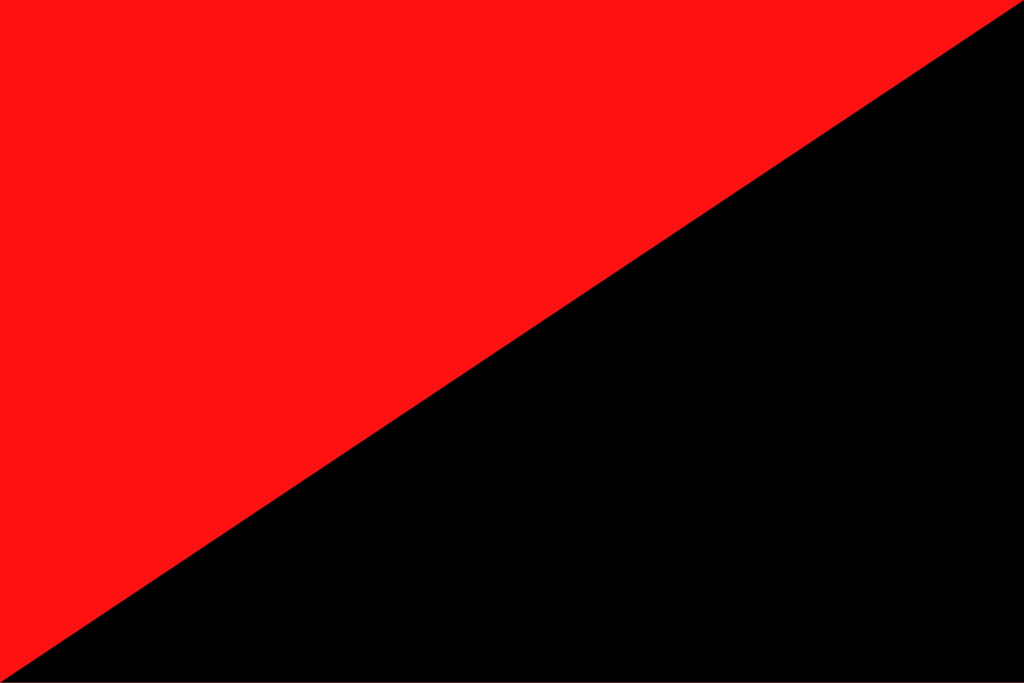
 Anarcho-communism, or anarchist communism or liberterian communism, is a far left and anarchist political ideology that advocates for communism and the abolishment of the state. Instead of the state, it would instate a network of voluntary association through which would meet everyone's needs. In an anarchist communist society, the state and private property are abolished. Systems of production and distribution are managed by participants and everyone is free to contribute and take according to their own needs. It is generally considered a variation of communism, anarchism and/or libertarian communism. It distinguishes itself from other variations by its staunch opposition to political power and hierarchy. It stresses the abolition of the latter, as well as the abolition class distinctions. Another central theme of anarchist communism is the abolition of wage labour. Many anarcho-communists are often anarcho-syndicalists, anarchists who center trade unions as a vehicle for class conflict, as well.
The ideology is often considered controversial. It is often regarded as a childish, idealised, and illogical worldview by the general public and other ideologies. Many communists believe they are too anarchist and ridicule the idea of an existence without government, while many anarchists believe they are too communist and consider it a betrayal to follow an ideology that uses a state structure so heavily. Common critiques of anarchist communism are that people would be too lazy to work without monetary incentive, that a society without a power structure would simply collapse or form one of its own, and that they are too individualistic. Many of these critiques are often ones that communism and anarchism also receive often. There are also debates within anarchist communism. The topic of these internal debates if often ones that can also be found in debates within communism or anarchism. The overlap between the three ideologies is, of course, because anarchist communism is at the intersection of communism and anarchism. Thus, the problems that plague those ideologies and the critiques they receive are often found within anarchist communism as well.
Apart from a reputation of being illogical and too idealistic, anarchist communism tends to be considered a violent and chaotic. This mainly comes from the mistrust from both radical ideologies it was formed from, and the general public, but also its calls for the abolition of many key parts of our modern society. Additionally, incidents such as the Arkhangelsk FSB office bombing in Russia and the many militia organisations that are headed and motivated by anarchist communism contribute to the image of a radical and violent ideology. [1][2][3]